
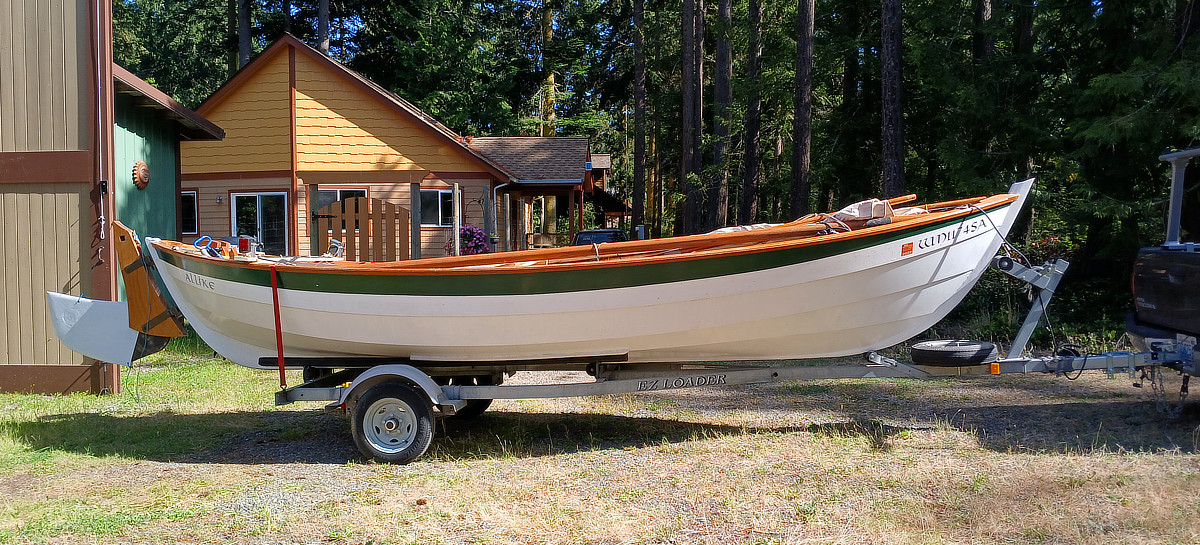
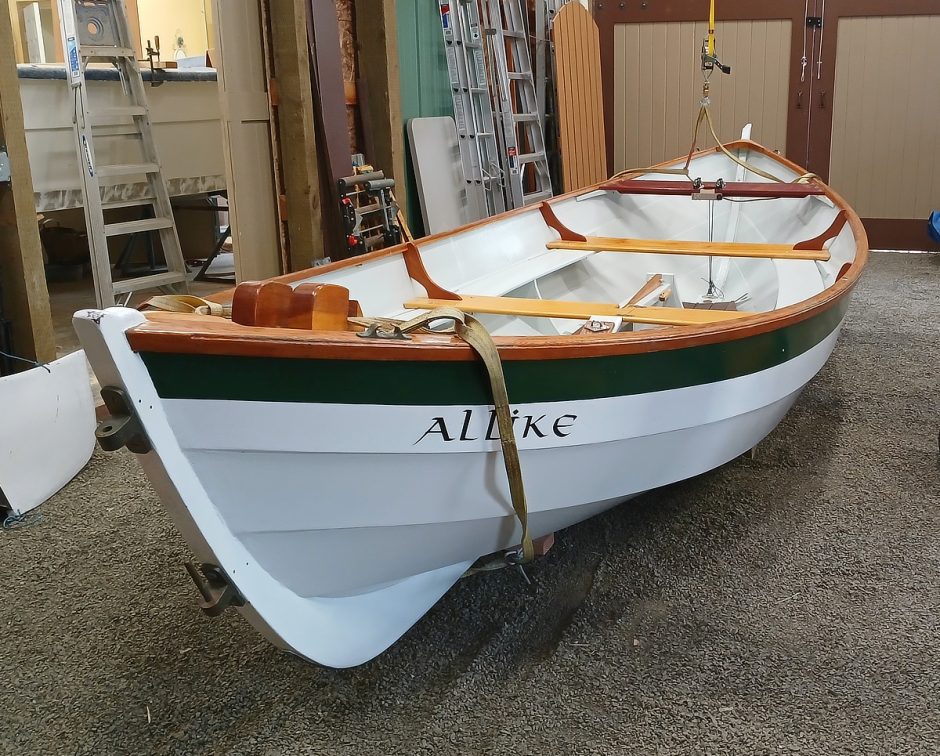
I took the new Caledonia Yawl out for its first sail. I bought the boat used nearly a year ago, but because of other projects I only recently was able to do the minimum necessary work to get her sailing.
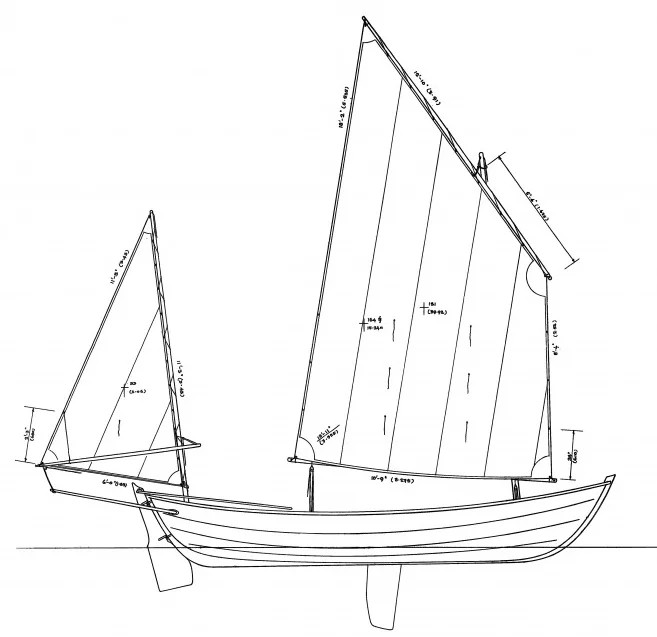
It is so big compared to my last sailing dinghy that I was not exactly sure what to expect. I have owned a number of larger keelboats, but this is decidedly a big dinghy at nearly 20 feet long, with no ballast, a centerboard, and only weighting around 350 lbs.
It looks kind of huge on the trailer, but like all boats it shrinks at the dock. Moving around inside it is much more stable than the more slender sail/oar ilk, yet not so big I can’t easily launch and sail it alone. It takes all of ten minutes to rig and launch at the marina.
The rig is my favorite unstayed balanced lug, but now I have the great benefit of a mizzen (the stern mast/sail). The mizzen is mostly an air rudder, and produces little lift. It helps balance the helm, and will keep the boat into the wind when raising or reefing, anchoring, or when I need a break. This is a wonderful feature for someone who sails solo.
Once out sailing, I really enjoyed it. There was not a lot of wind, but it sailed well. The sails are in excellent condition, made locally in a soft cruising dacron, with excellent shape aloft. The boat is big enough to take a handful of people out in. I really enjoy the looks of it. And it has a nearly new trailer. It’s a keeper!
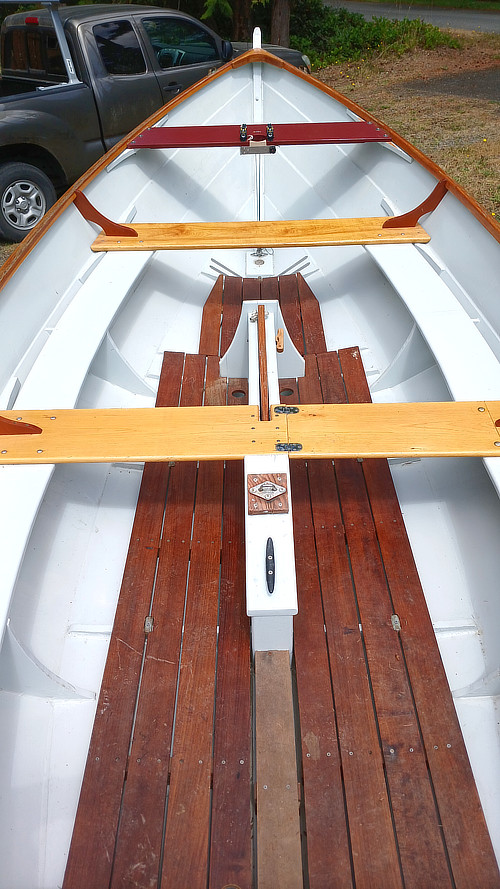
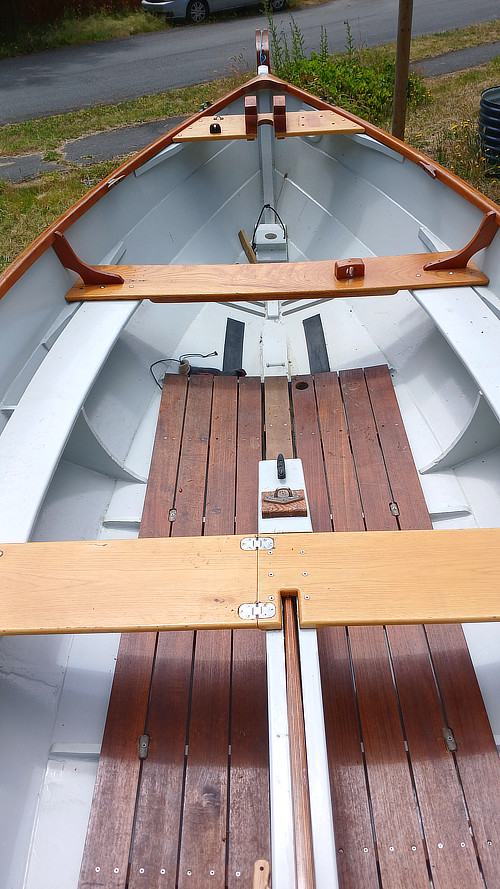
For anyone who knows me, the purchase of this boat was probably surprising. For many years I have been in the sail/oar camp. And if that, I strongly prefer a small, slender, sail/oar boat, to make the rowing more effective. The Caledonia Yawl is definitely not a sail/oar boat for me. It’s long, with lots of freeboard, and the widest beam of any of Iain Oughtred’s double ended beach boats. Nope, this is firmly a sail oriented craft, with outboard motor auxiliary. Sure, if there is no wind, I can row it out of the marina, but I would not get far in any wind and waves.
So why the switch of boat types? I learned a lot over a number of years from my Skerry cruiser experiments and travels. I confirmed that if I want to be able to row some miles, the boat needs to be slender and lightweight, without much windage. And that combination makes for a sailboat that is very tender and physically active. And the camping at anchor accommodations are very tight. And yet, the entire thing is still pretty big and heavy to manage on a beach, with all our local tide changes. I decided that for a boat I will sleep on, I would rather anchor it out most of the time, and use my little portage pram for a shore boat. I also found my small sail/oar boat a bit too small for crossing a larger strait.
I decided to split the boat into two, one that was better at rowing, car-toppable and was easier to move on shore, and a sailboat that was large enough to take friends, and to cross a strait in some comfort with a little motor to insure I get there, and big enough for a few weeks of camping on. This combination will not be perfect, but will be fun to play with.
I was not shopping specifically for a Caledonia Yawl. One just came up locally, at a very good price, and I figured it would do.
Rebuild & Refurbish Time!
I determined I like the boat. But it had enough issues, that make me a bit nervous about using it, that I decided to just immediately fix the boat up like I want. So my planned work on the Lavro motor boat will get put off for a few more months.
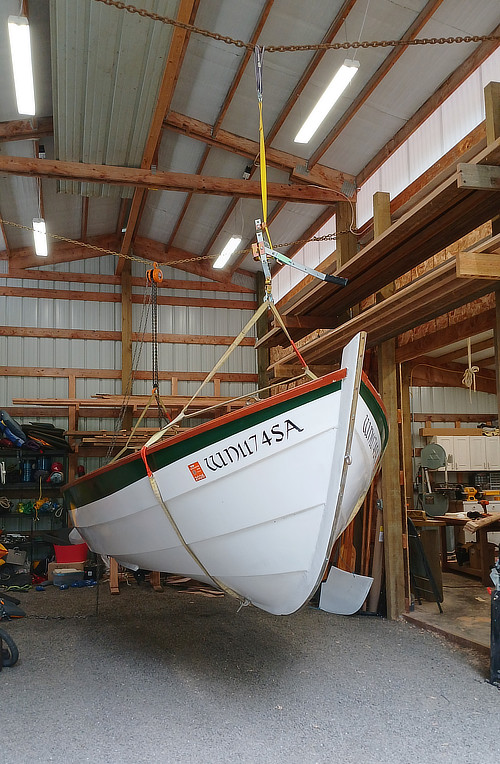
There is a long list of improvements I am going to make. And I have already started. The boat is off the trailer in my shop, currently sitting on some wood blocks almost on the ground, to make it easier to get inside to do most of the work.
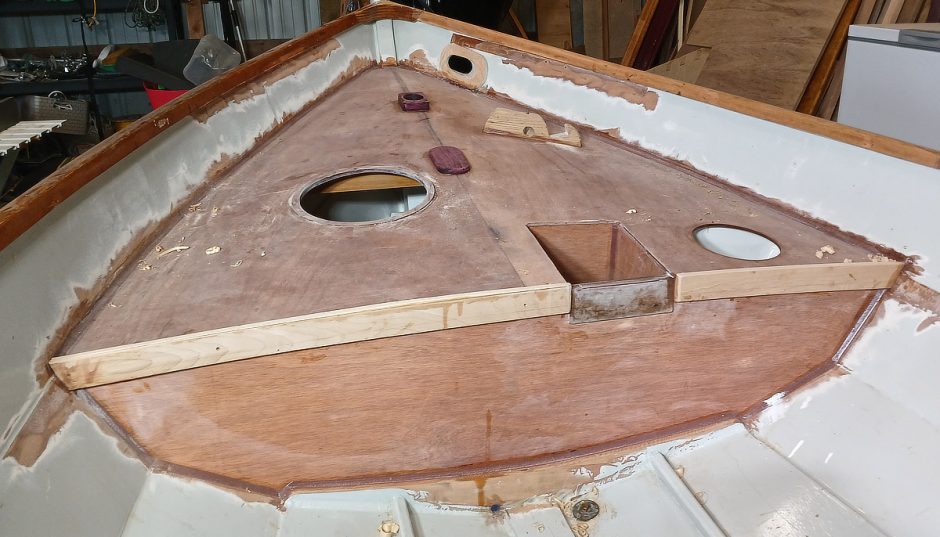
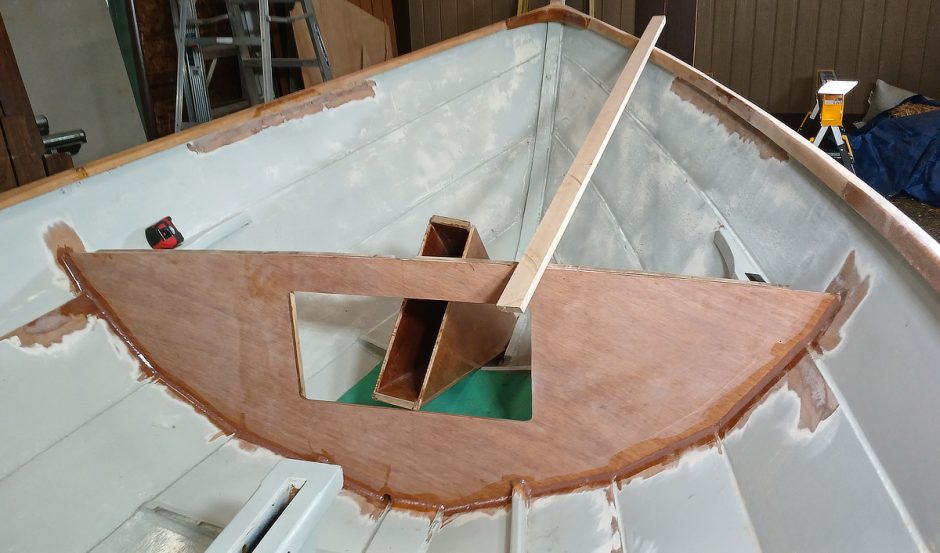
For & Aft Decks & Buoyancy Chambers & Outboard Motor Well
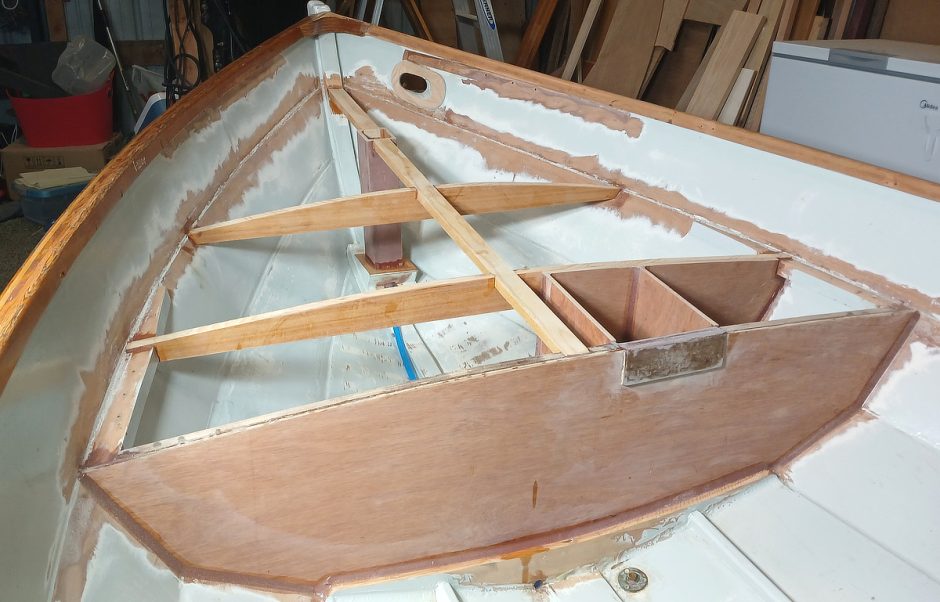
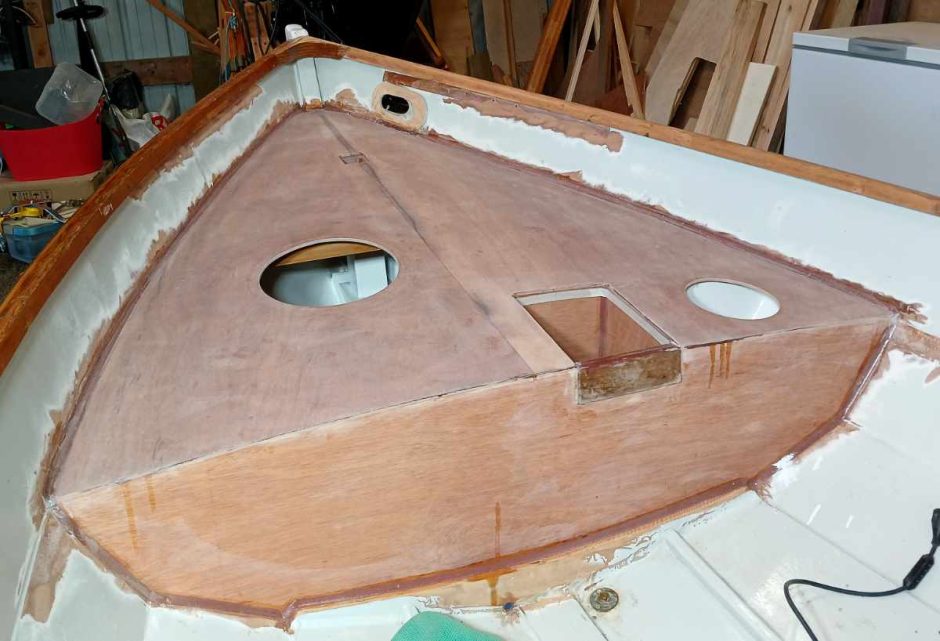
It is a giant tub of a fully open boat. If capsized, as currently configured, with its open centerboard top, these boats are unrecoverable without assistance from another boat, and probably towing it to shore. So I am installing the optional decks on each end, that are fully sealed for positive buoyancy. The mast boxes will have drain tubes into the cockpit.
I always assume a capsize will happen in these cold waters, and know many stories of friends and family who have nearly died in capsizes. Unassisted capsize recovery is essential. Two Caledonia Yawls in California capsized nearly simultaneously just a few weeks ago, and each had a number of people aboard. The one that was fully open inside could not be recovered without a bunch of assistance and trouble. The boat that had buoyancy decks was able to recover.
When in stalling the forward deck I am eliminating the second main mast position that is further astern, which is designed to be used if the mizzen sail is not used. No one I know who has one of these boats ever uses it. Everyone uses the mizzen in all situations, if sometimes reefed.
The boat had an outboard motor bracket on the back quarter. It was stupid. The motor sucked air when the boat rolled or someone moved forward. And even in calm conditions it took water over the head. So an internal motor well will be built. The brand new 2.5hp Suzuki I bought for it only weights 30 lbs, and drives the boat smartly along at just 1/4 throttle. It is fairly quiet and has little vibration. This newest version has larger internal coolant lines, reducing clogging issues. Great motor.
One of the downsides to having a motor well is that when sailing I will need to pull the motor out, and strap it down on the stern deck. Not a big deal with how lightweight this motor is. The upside is that when in use the motor is right at hand for easy control, next to the tiller, instead of hanging awkwardly, ugly, and hard to reach off the back of a transom. Transom hung motors also tend to ventilate in waves, and this one never will.
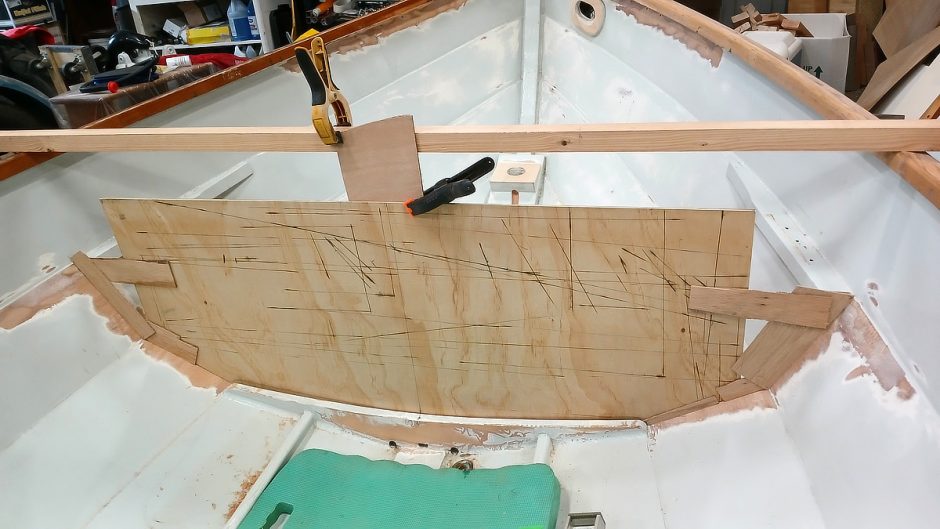
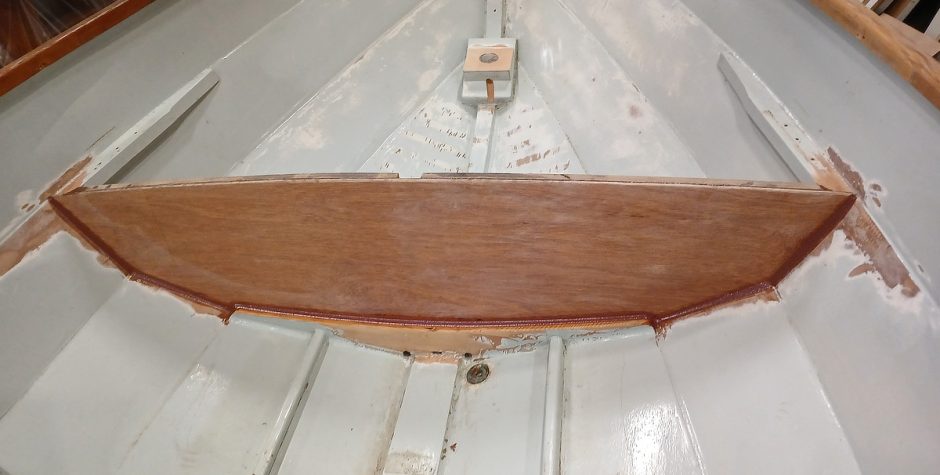
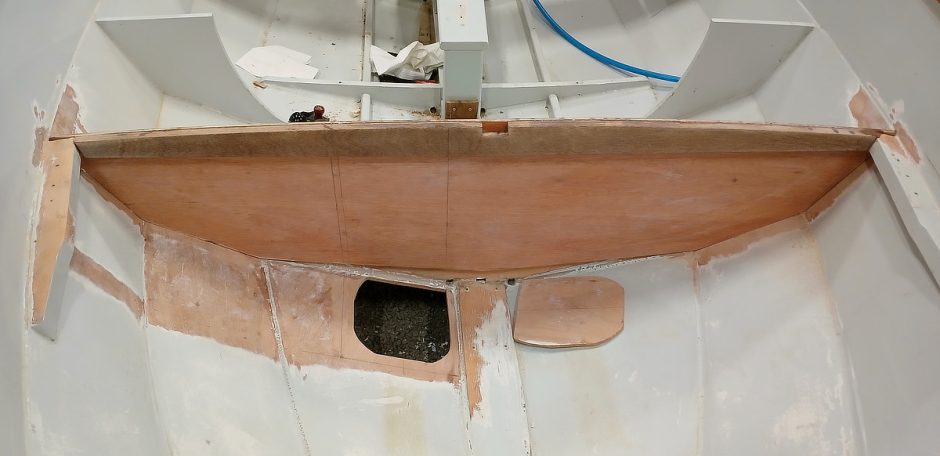
The motor well will create an area next to it on the port side that will be awkward to access under the deck, with the single hatch I had planned for the stern. So I decided to extend the stern wall of the motor well all the way across, making a small boxed in area that will be accessed by another smaller hatch on top. It will have a few little shelves and dividers inside, for stashing phone/keys/wallet, sunscreen, binoculars, air horn, flares, gps, water bottle, clothing layers, etc. All the stuff that needs to be easily at hand, but I don’t want lost if a capsize happens.
New Top Spar From Sitka Spruce & Refinish Spars
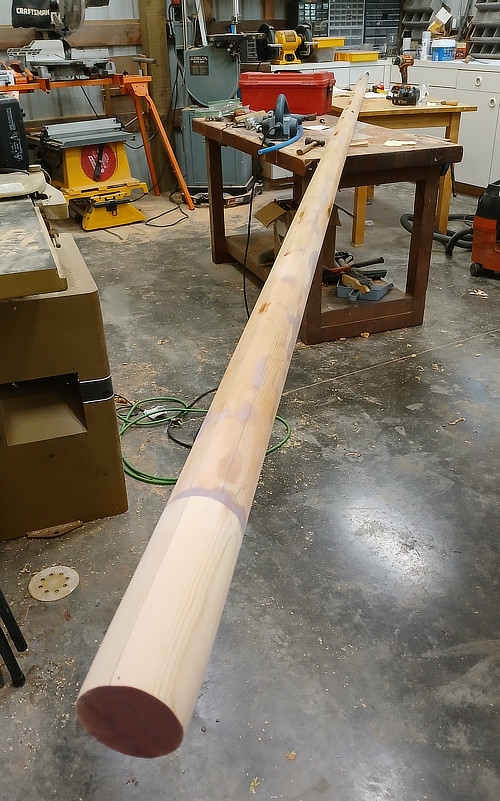
The rig is heavy to haul up. Its top spar is solid Douglas Fir. I think I can make one much lighter weight in Sitka Spruce. I just acquired a pile of nice spruce, reclaimed from a old 70′ long mast.
I am also refinishing all the spars and will paint them.
Carbon Fiber Mizzen Mast
I have a carbon fiber windsurfer mast, that is exactly the same length as the mizzen mast on this boat. Normally windsurfer masts are not good for masts on other boats. They flex too much.
The current mizzen mast is made of solid Douglas Fir wood, is heavy, and a bit crude. I supported both masts on their ends and was pleased to see that both have nearly identical bend characteristics. So I will use it, since it weights about a third of the wood one.
I will glue the two carbon mast sections together, and add waterproof plugs to the ends, so that it floats. And all attachments will be epoxied on.
Reshape Rudder & Center Board
The leading and trailing edges of the rudder are much too blunt. It needs a bit of reshaping into a better foil. When I pull the center board out I expect to find the same.
New Standard Tiller
It also needs a new tiller. I am fine with push pull tillers, which are standard on these boats. But for this craft I decided I want a standard tiller. So I will laminate one up that passes around the mizzen mast on one side, and it will have a tiller extender stick available on top.
Lead Ballast
I have about 200 pounds of lead bricks I am going to attach under the floorboards to slow the boats roll.
Repair Broken Deck Frame
There is a little frame, running off the centerboard slot, that the floor boards sit on. One end has broken away from the plywood, and needs repair. I have seen a similar problem in other Oughtred boats. The torque of the centerboard box is not spread out fully into the hull sides, causing point loading, and plywood failure. Others have added a couple of laminated ring frames. I am uncertain yet what my solution will be.
Storage Boxes & Tie Points
I am going to borrow the side storage bins idea that I installed on my modified Skerry. I really liked that for containing and strapping down anchors, dry bags and other items. There will be four bins, two on each side, just before the forward deck bulkhead.

I am also going to install tie points all along the hull under the benches for tying in dry bags, oars, and other gear.
Also, the inner gunnel on this boat is solid. I am gong to router in some slots midship. I find a gunnel that has spacers so handy for tying different things to. On my recent rowing trip, I counted that I had 10 different things tied to the gunnel.
New Floorboards
I will probably make all new floorboards. They need to be split into two removable sections, because of the new bulkheads that will be at each end. And they need to cover more width inside, in part to facilitate sleeping on. The boat has a hinged center thwart for making sleeping on the floor easier.
Repaint Everything
The boat will get fresh paint inside and out. All brightwork will be converted to paint.
Camping Tent
This will happen after the boat is launched, but I am keeping in mind the need for a tent, hung between the masts, for camping aboard. My decks will have short coamings, with drains outboard, which will make it so the tent does not need to cover the entire boat.
Updates On This Project
Note, I am just going to keep updating this post as this project moves along, so return here for progress.
Comments or questions? Click here.
Get on the mailing list to receive notice of new posts here.
Sharing?
Please do share this webpage URL anywhere you like. Do not copy any pictures or content though, unless you enjoy copyright lawsuits.